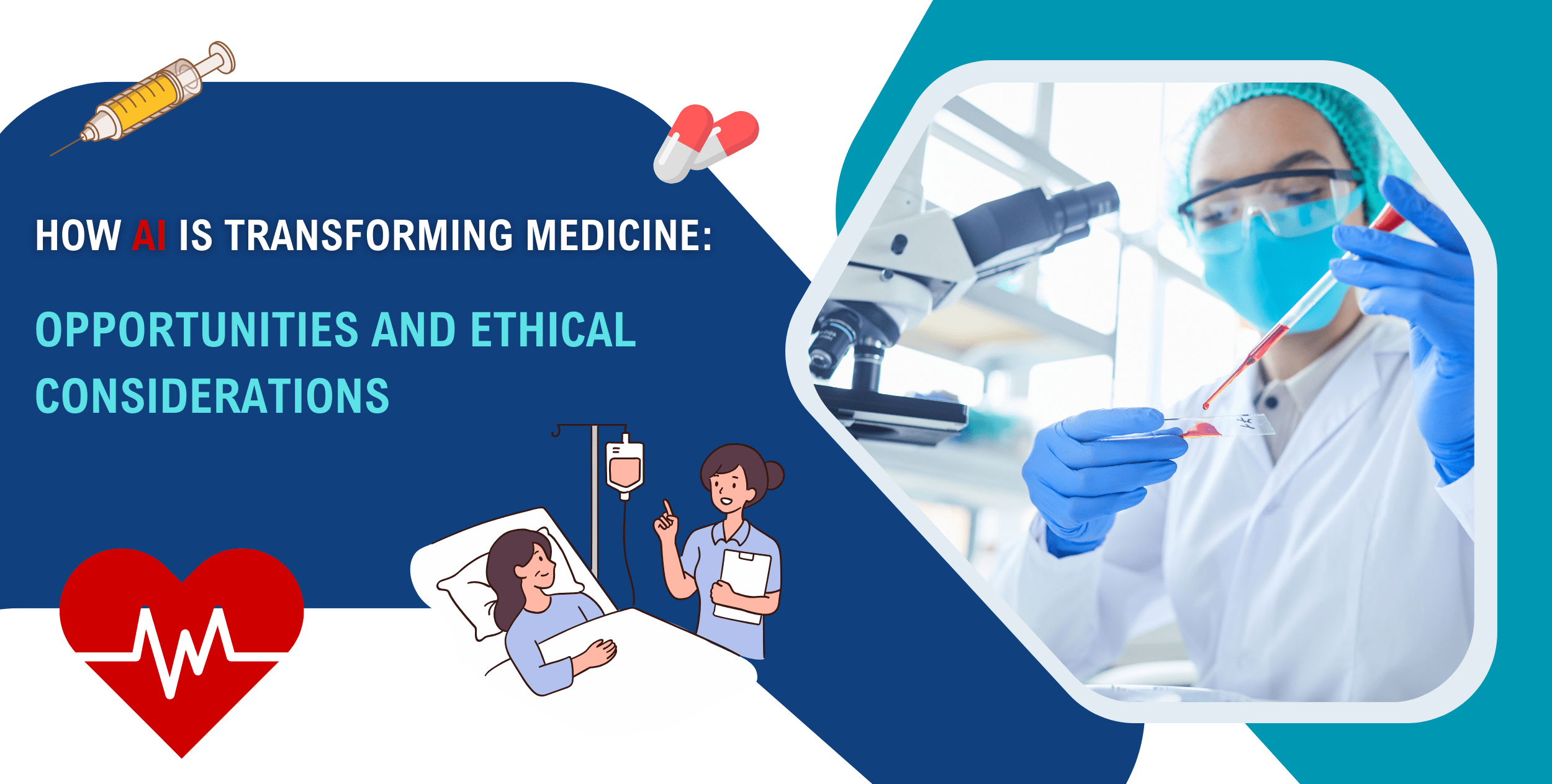

Artificial Intelligence (AI) is rapidly transforming the field of medicine, offering innovative solutions that enhance diagnostics, treatment, personalized medicine, and overall healthcare delivery. This article provides a comprehensive overview of the current landscape of AI in medicine, highlighting the most cutting-edge technologies and their applications.
AI in Diagnostics
AI’s role in diagnostics is one of the most significant advancements in modern medicine. AI algorithms can analyze medical images such as X-rays, MRIs, and CT scans with remarkable accuracy, often identifying abnormalities that might be missed by human radiologists. For instance, AI systems have been developed to detect lung nodules in CT scans, which are early indicators of lung cancer, with a high degree of accuracy.
Moreover, AI is not limited to imaging. It can analyze a wide range of patient data, including bio-signals (e.g., ECG, EEG), vital signs, and laboratory test results. This multimodal data analysis allows for a more comprehensive understanding of a patient’s health, leading to more accurate diagnoses and better-informed treatment decisions. AI’s ability to integrate and analyze diverse data sources is revolutionizing the diagnostic process, making it faster and more reliable.
AI in Treatment
AI is also making significant strides in the realm of treatment. Machine learning algorithms can predict how patients will respond to different treatments, enabling more personalized and effective care. For example, AI can help oncologists determine the best chemotherapy regimen for a cancer patient based on their genetic profile and other factors. This personalized approach not only improves treatment outcomes but also minimizes adverse effects.
In addition to personalized treatment plans, AI-powered robots are being used in surgical procedures. These robots provide greater precision and control, reducing the risk of complications and improving patient recovery times. Robotic surgery is particularly beneficial in complex procedures where precision is critical, such as neurosurgery and orthopedic surgery.
Personalized Medicine
Personalized medicine is another area where AI is set to make a significant impact. By analyzing large datasets that include genetic information, lifestyle factors, and clinical data, AI can help develop tailored treatment plans specific to each patient. This approach not only improves the effectiveness of treatments but also reduces the risk of adverse reactions. AI-driven personalized medicine has the potential to transform how diseases are treated, moving away from a one-size-fits-all approach to a more individualized strategy.
AI’s ability to analyze and interpret complex biological data, such as genomics, proteomics, and metabolomics, is central to the advancement of personalized medicine. By identifying unique biomarkers and understanding the interactions between different biological systems, AI can provide insights that were previously unattainable. This level of precision in diagnosis and treatment planning is paving the way for more effective and targeted therapies.
AI in Clinical Decision Support
AI is also playing a crucial role in clinical decision support. AI-powered tools can provide healthcare providers with quick access to relevant information and research, helping them make more informed decisions about patient care. These tools can analyze patient data in real-time, alerting clinicians to potential issues and suggesting possible interventions. For example, AI can monitor patients in critical care settings, detecting early signs of conditions like sepsis and alerting healthcare providers to take action before the condition worsens.
The integration of AI in clinical decision support systems is enhancing the quality of care by providing evidence-based recommendations and reducing the likelihood of human error. This is particularly important in complex cases where multiple factors need to be considered, and timely decision-making is critical.
AI in Research and Drug Discovery
AI is also revolutionizing medical research and drug discovery. By analyzing vast amounts of data from clinical trials, electronic health records, and scientific literature, AI can identify patterns and insights that would be impossible for humans to discern. This capability is accelerating the pace of research and leading to the discovery of new drugs and therapies. For instance, AI algorithms can predict how different compounds will interact with biological targets, significantly speeding up the drug discovery process. This not only reduces the time and cost associated with bringing new drugs to market but also increases the likelihood of finding effective treatments for complex diseases.
Ethical Considerations and Challenges
While the potential benefits of AI in medicine are immense, there are also significant ethical considerations and challenges that must be addressed. Issues such as data privacy, algorithmic bias, and the need for transparency in AI decision-making processes are critical. Ensuring that AI systems are developed and implemented in a way that is ethical and equitable is essential for gaining the trust of both healthcare providers and patients. Moreover, there is a need for robust regulatory frameworks to oversee the use of AI in healthcare, ensuring that these technologies are used responsibly. Addressing these challenges will be crucial for the successful integration of AI into mainstream medical practice.
Conclusion
The current landscape of AI in medicine is marked by rapid advancements and transformative potential. From improving diagnostic accuracy to personalizing treatment plans and enhancing clinical decision support, AI is revolutionizing every aspect of healthcare. However, it is crucial to address the ethical and regulatory challenges associated with AI to ensure that these technologies are used responsibly.
As we move forward, continued research, innovation, and collaboration among stakeholders will be essential to unlocking the full potential of AI in medicine. The future of AI in healthcare is bright, and its integration promises to bring about a new era of precision, efficiency, and improved patient outcomes.
By Victor O. Penna, MD, RDMS, RVT
Tampa Bay, Florida USA
Primary Care Ultrasound
Pc-ultrasound.com