
0
Your Wishlist : 0 listings








0
Close
Your cart

You have no bookmark.
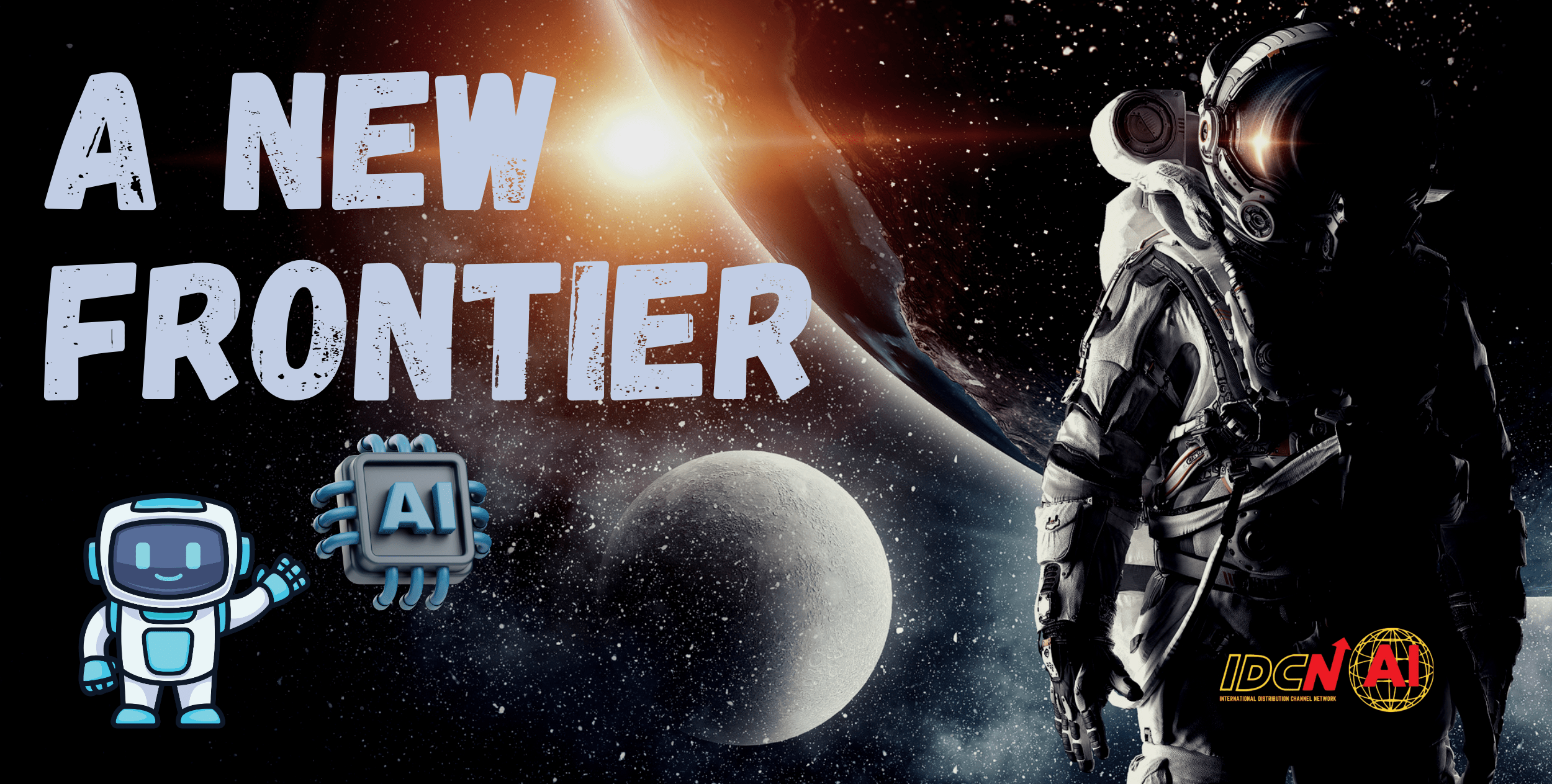
Imagine a future where part of the human race ventures beyond Earth, establishing a colony on an alien world that functions like a living petri dish—a self-sustaining, micro-biosphere controlled and regulated by advanced AI. In this extraordinary future, human settlers, with the help of AI, will not merely adapt to a new planet but will actively engineer it, shaping its ecosystem, atmosphere, and resources to sustain life. This is not science fiction; it’s a glimpse into humanity’s next chapter of evolution.
In this article, we’ll explore how AI could transform planetary colonization, allowing humanity to cultivate new worlds, create controlled ecosystems, and engineer the very foundations of life on other planets.
The first step in humanity’s extraterrestrial journey will be identifying planets that can support life—perhaps Mars, one of Saturn’s moons like Titan, or even a distant exoplanet. Using AI-driven telescopes and satellites, scientists are currently gathering vast amounts of data on potential habitable planets, analyzing atmosphere, climate, gravitational strength, and chemical composition.
AI plays a crucial role in interpreting data from thousands of potential worlds. With machine learning algorithms, scientists can simulate planetary environments, identifying which worlds could host life and how they might need to be altered. By the time humans make their journey, they will have intimate knowledge of the planet’s geography, resources, and weather patterns, allowing settlers to land with a solid foundation of knowledge.
Upon arrival, human settlers will create controlled micro-biospheres—small, self-contained environments capable of supporting human, animal, and plant life. These biospheres will function as miniaturized Earth ecosystems, complete with an atmosphere, water cycle, soil, and temperature control, all regulated by sophisticated AI systems.
Atmospheric Regulation: AI systems will monitor and adjust oxygen, nitrogen, and carbon dioxide levels, ensuring the air is breathable and stable.
Water Cycle Management: Using recycled water systems, AI will regulate water supply, evaporation, and condensation, mimicking Earth’s natural water cycle.
Temperature Control: With fluctuating planetary temperatures, AI will act as a thermostat, keeping internal temperatures within safe limits for humans, plants, and animals.
Why This Matters: These AI-managed biospheres will allow humanity to live and thrive in a foreign environment while protecting the delicate balance of each ecosystem. AI will function as the “caretaker” of life, ensuring that every variable—from air quality to soil nutrients—is optimized for survival.
Creating micro-biospheres is only the first step. The ultimate goal will be to expand these biospheres to cover larger parts of the planet, slowly transforming its surface to support human life. This process, known as terraforming, involves altering the planet’s atmosphere, temperature, and landscape, essentially “re-engineering” it to be Earth-like.
Atmosphere Generation: Using AI, humans could release controlled amounts of greenhouse gases to warm the planet or deploy machines that produce oxygen by breaking down planetary rocks and minerals.
Climate Control: AI will manage planetary temperatures, using reflective materials to cool areas or “sunlight concentrators” to warm others, creating stable zones for life.
Soil Enrichment: AI can assist in enriching alien soil by introducing Earth-like bacteria and nutrients, allowing plants to grow and contributing to oxygen production.
The Role of AI: Terraforming requires precise monitoring and adaptation over hundreds of years. AI, with its ability to analyze data and adapt in real-time, will become the ultimate terraform engineer, making constant adjustments to bring the planet closer to an Earth-like state. Terraforming would be nearly impossible for humans to control manually; AI’s precision and adaptability are essential.
Once the planet has a stable atmosphere and climate, the next step will be creating a self-sustaining ecosystem, much like a giant, AI-monitored “petri dish.” This involves carefully introducing plant, animal, and bacterial life, each species playing a role in the planetary ecosystem. AI will monitor and balance these species, just as a scientist would monitor microorganisms in a petri dish.
Biodiversity Control: AI will determine which plants and animals are thriving, which are at risk, and make adjustments by controlling breeding rates, nutrient distribution, and habitat conditions.
Environmental Feedback Loops: AI will constantly monitor feedback loops, such as oxygen production by plants and carbon dioxide from animals, ensuring that balance is maintained.
Disease and Pest Control: AI will detect and respond to invasive species or diseases that could disrupt the ecosystem, preserving stability without human intervention.
This AI-controlled ecosystem will evolve to become a dynamic, adaptive biosphere. Over time, AI will “learn” from the ecosystem, refining its algorithms to allow for a balance of life forms that can thrive independently, even as humans continue to expand.
In this AI-powered colony, humans will rely on AI not only for survival but also for managing daily life. From AI-powered farms to self-regulating homes and autonomous healthcare systems, AI will serve as the infrastructure upon which society is built.
Agriculture: AI-driven farms will use hydroponic systems to grow crops within biospheres, recycling water and adjusting nutrients based on crop health.
Healthcare: Medical AI will monitor colonists’ health in real-time, detecting illnesses, managing medications, and even performing basic surgeries if necessary.
Resource Management: AI will track and manage essential resources, such as water, food, and energy, ensuring that waste is minimized, and efficiency is maximized.
In many ways, AI will replace traditional government functions, making decisions based on data rather than politics. It will allocate resources, monitor social well-being, and ensure that no one lacks basic necessities. This AI society will be a self-sustaining, highly efficient civilization.
This new AI society raises profound ethical questions. What happens to human autonomy in a world where AI manages every aspect of life? Will people grow too dependent on AI, losing basic survival skills? And who owns the AI systems—do they belong to the human inhabitants, or will corporations and governments back on Earth retain control?
Human vs. AI Control: How much autonomy should humans have on this new planet? While AI can efficiently manage resources, some worry that it could restrict human freedom, deciding everything from job assignments to food rations.
Data Privacy and Surveillance: AI will have unprecedented access to personal data, from health metrics to social interactions. How will colonists’ privacy be protected in a society governed by AI?
Corporate Control of AI Systems: If corporations from Earth maintain ownership of AI systems, will this colony remain a true off-world civilization or just an extension of corporate control?
Humanity will need to establish ethical guidelines to ensure that the AI governing this new world serves the colonists’ interests without infringing on their freedoms.
This AI-powered planetary colony won’t just be a new home; it will be a “laboratory” for humanity’s evolution. By living in a highly controlled environment, free from Earth’s natural constraints, humans may adapt in ways we can’t currently imagine.
Physical Evolution: Over generations, colonists may develop new physical traits to adapt to life in lower gravity or higher radiation levels. AI could monitor these changes, potentially enhancing them with genetic engineering if needed.
Social Evolution: With AI controlling resources and basic needs, colonists may develop new social structures. Without competition for resources, a more collaborative, cooperative society could emerge.
Philosophical Changes: Living on an AI-controlled planet may change humanity’s understanding of freedom, autonomy, and what it means to be “human.” As humans become interdependent with AI, our relationship with technology may shift from mere tools to true co-existence.
The vision of an AI-controlled, self-sustaining planetary colony represents the ultimate fusion of human ingenuity and machine intelligence. This isn’t just about survival on a new planet; it’s about redefining life, society, and humanity itself. As we step into this incredible new era, we are not only conquering the cosmos but transforming ourselves in the process.
This journey will force us to confront the boundaries of autonomy, identity, and evolution. And at the heart of it all, AI will stand as both our guide and guardian—a co-pilot as we explore the final frontier.
Are you ready to be part of the next chapter of human evolution? Visit [IDCN website link] to stay updated on the latest advancements and to connect with a community of visionaries building the future, one innovation at a time.
No products in the cart.
International Distribution Channel Network
www.IDCN.network
Comprehensive AI Directory | IDCN AI Network
Copyright © 2024. International Distribution Channel Network