
0
Your Wishlist : 0 listings













0
Close
Your cart

You have no bookmark.
Reducing the Emotional and Physical Impact of Climate Disasters
Natural disasters like hurricanes, typhoons, and other climate-related disturbances have a profound emotional and psychological impact on individuals and communities. The uncertainty surrounding when and where these extreme weather events will strike, and the destruction they leave in their wake, often creates a deep sense of fear, anxiety, and helplessness. Whether it’s the anticipation of a powerful storm or the aftermath of floods and destruction, the emotional toll can be overwhelming. Families lose their homes, businesses are disrupted, and entire communities are left to pick up the pieces.
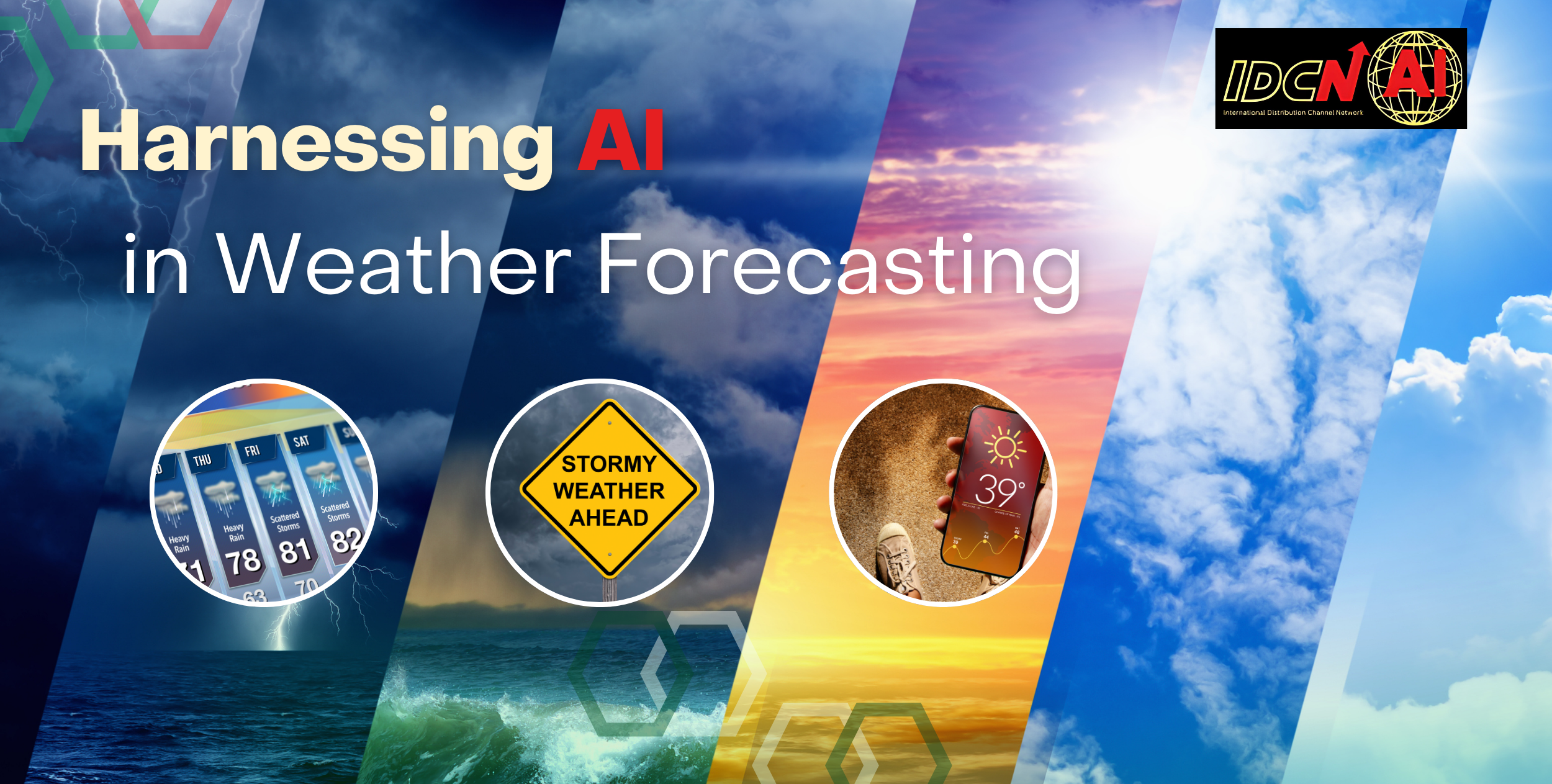
In the face of such emotionally and physically devastating events, many of us long for some level of control or preparedness to minimize the damage. While we cannot prevent natural disasters, we can take steps to mitigate their impact. This is where Artificial Intelligence (AI) emerges as a powerful ally. AI, with its ability to predict weather conditions with greater accuracy and lead time, offers a way to better prepare for these events. AI-driven forecasts provide critical windows of time for communities to take precautionary measures, which can help save lives, protect livelihoods, and reduce the overall damage to homes, businesses, and infrastructure.
By harnessing AI in weather forecasting, we not only reduce the physical destruction caused by climate change-driven weather disturbances but also lessen the emotional burden that accompanies these events. In this article, we will explore how AI is transforming weather forecasting and how its advancements are helping to save lives, protect economies, and improve community resilience in the face of natural disasters.
Traditional weather forecasting relies on physics-based models that simulate atmospheric conditions. While these models have served us well for decades, they often fall short in predicting extreme weather events like hurricanes, typhoons, and tornadoes with the precision required to prevent catastrophic losses. These events are complex, involving numerous variables that can change rapidly, making it difficult to predict their exact path, intensity, and impact.
AI addresses these limitations by leveraging machine learning algorithms and deep learning models capable of processing vast datasets from satellites, sensors, and historical weather patterns. AI systems can recognize intricate patterns and trends that may elude human forecasters, allowing for more accurate and timely predictions. AI can quickly analyze data in real-time, improving the accuracy of weather forecasts and reducing the uncertainty that often accompanies predictions of extreme weather events.
Moreover, AI has the ability to “learn” from historical data, refining its forecasts over time. The more data the system processes, the more precise its predictions become. This capacity for continuous improvement is particularly important in the context of climate change, where weather patterns are becoming more volatile and unpredictable.
The most significant benefit of AI in weather forecasting is its potential to save lives by giving earlier and more accurate warnings for extreme weather events. When communities are forewarned with sufficient time to prepare, the risk of casualties is significantly reduced. AI-based systems can identify early warning signs of hurricanes, typhoons, and other severe weather events, allowing for quicker and more informed decision-making by authorities and emergency responders.
In addition to saving lives, AI-driven weather forecasting plays a crucial role in safeguarding livelihoods and minimizing the economic impact of natural disasters. Extreme weather events often lead to significant financial losses, particularly in industries like agriculture, logistics, and infrastructure. With more accurate and timely forecasts, businesses can take preventive measures to protect their assets and operations.
AI’s ability to predict weather events is also helping to protect critical infrastructure, ensuring that communities are more resilient in the face of natural disasters. Roads, bridges, power grids, and water systems are often the first casualties of extreme weather events, leaving communities without essential services when they need them most. AI can play a vital role in safeguarding these systems and minimizing damage.
The integration of AI into weather forecasting represents a significant leap forward in how we prepare for and respond to extreme weather events. By providing more accurate and timely predictions, AI not only helps save lives but also protects livelihoods and reduces the overall damage caused by hurricanes, typhoons, and other climate change-driven weather disturbances. As the frequency and intensity of these events continue to rise due to climate change, AI’s role in enhancing early warning systems, optimizing disaster response, and strengthening community resilience will become increasingly crucial.
In a world where uncertainty surrounding extreme weather is a growing source of emotional and psychological stress, AI offers a beacon of hope. It empowers individuals, businesses, and governments with the tools they need to protect themselves, their loved ones, and their communities, ultimately reducing both the physical and emotional toll of these devastating events.
No products in the cart.
International Distribution Channel Network
www.IDCN.network
Comprehensive AI Directory | IDCN AI Network
Copyright © 2024. International Distribution Channel Network