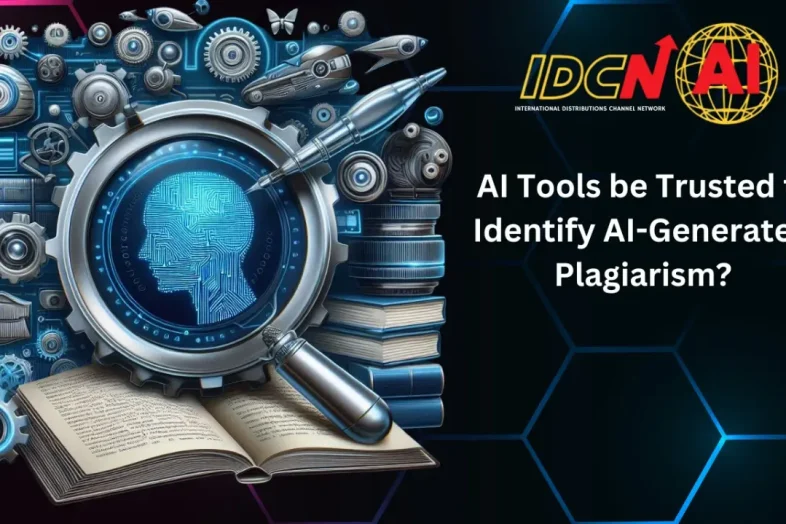
Artificial intelligence has revolutionized many aspects of our lives, including content creation. However, this innovation comes with a dark side—AI-generated plagiarism. Ironically, the same technology that enables this new form of plagiarism is also being employed to detect it.
But can we trust AI to police itself? In this article, we explore whether AI-powered tools are up to the task of identifying content created by their own kind and what this means for the future of academic integrity.
The Evolution of AI in Content Creation
AI’s Growing Role in Content Creation
AI’s role in content creation started with simple tasks like generating reports. Today, tools like OpenAI’s GPT models produce essays, articles, and even creative writing that closely resembles human authorship. These systems use deep learning algorithms trained on vast datasets of text to generate coherent, contextually appropriate content.
Implications for Plagiarism
As AI-generated content becomes more prevalent, traditional plagiarism detection methods struggle to keep up. These tools, which compare text against databases of published work, may miss AI-generated content that is original in structure but similar in style to existing works. This poses a significant challenge in academic settings, where originality is crucial.
AI-Powered Plagiarism Detection Tools: Solution or Problem?
How AI Detection Tools Work
New AI-powered plagiarism detection tools have emerged to tackle these challenges. These tools use machine learning algorithms and natural language processing to analyze text more deeply. Unlike traditional methods that rely on comparison against databases, AI tools assess linguistic patterns, writing styles, and semantic meaning to detect similarities.
Strengths of AI Detection Tools
AI detection tools offer several advantages: speed, accuracy, and the ability to handle large volumes of text. They can identify nuanced similarities and paraphrasing, making them effective at detecting AI-generated content. For instance, AI tools have successfully identified AI-generated plagiarism in academic settings, helping to maintain integrity.
Challenges and Limitations
However, these tools are not without limitations. AI-generated text is increasingly complex and sophisticated, making it difficult to distinguish from human-written content. AI tools might miss subtle AI-generated content or incorrectly flag human-authored work as plagiarized. This issue raises concerns about the reliability and accuracy of these tools.
The Ethical Dilemma: AI Policing AI
Ethical Concerns
Relying on AI to detect AI-generated plagiarism introduces ethical challenges. Can we trust AI to regulate its own creations? AI algorithms might exhibit biases, potentially leading to unfair outcomes. The lack of transparency in AI decision-making—often described as the “black box” problem—compounds these concerns.
Impact on Academic and Professional Integrity
The use of AI tools in plagiarism detection also impacts academic and professional integrity. While these tools enhance the ability to detect plagiarism, over-reliance on AI might lead to complacency, diminishing the role of human oversight. There’s a need to clearly define what constitutes original work in the AI era.
The Future of AI in Plagiarism Detection
Advancements on the Horizon
The future of AI in plagiarism detection looks promising, with advancements in deep learning and natural language processing on the horizon. These innovations could lead to more sophisticated detection methods, better equipped to handle AI-generated content. The integration of explainable AI (XAI) might also improve transparency and trust in these tools.
Human-AI Collaboration
Despite the potential of AI, human oversight remains crucial. A balanced approach that combines AI tools with human judgment will likely be the most effective strategy. Best practices might include regular audits of AI tools, ongoing training, and clear guidelines for distinguishing between human and AI-generated content.
Conclusion
Recap of Key Points
AI has transformed both content creation and plagiarism detection, creating a paradox where the technology is both a problem and a solution. While AI tools offer significant advantages, they also present limitations and ethical challenges that cannot be ignored.
Final Thoughts and Call to Action
As AI continues to evolve, we must recognize both its potential and its pitfalls. Ongoing research and dialogue are essential to refine AI tools and establish ethical guidelines, ensuring that academic and professional integrity is maintained in an increasingly AI-driven world.
For those navigating the complex landscape of AI and seeking reliable tools to support their work, IDCN AI offers a curated selection of trusted AI solutions. Our platform provides in-depth reviews, expert insights, and real user feedback to help you make informed decisions.
Whether you’re looking for plagiarism detection, content creation, or other AI-driven tools, IDCN AI is your go-to resource for finding the best technologies tailored to your needs. Explore our offerings and discover how IDCN AI can empower your academic and professional endeavors with cutting-edge AI solutions.





AI-Blog - Navigating the AI Revolution
[…] Startup Should Know About in 2024 Paid AI Tools: Are They Worth the Subscription Cost? Can AI Tools be Trusted to Identify AI-Generated Plagiarism? The Fusion Between Generative AI and Quantum Computing How AI is Transforming Medicine: […]