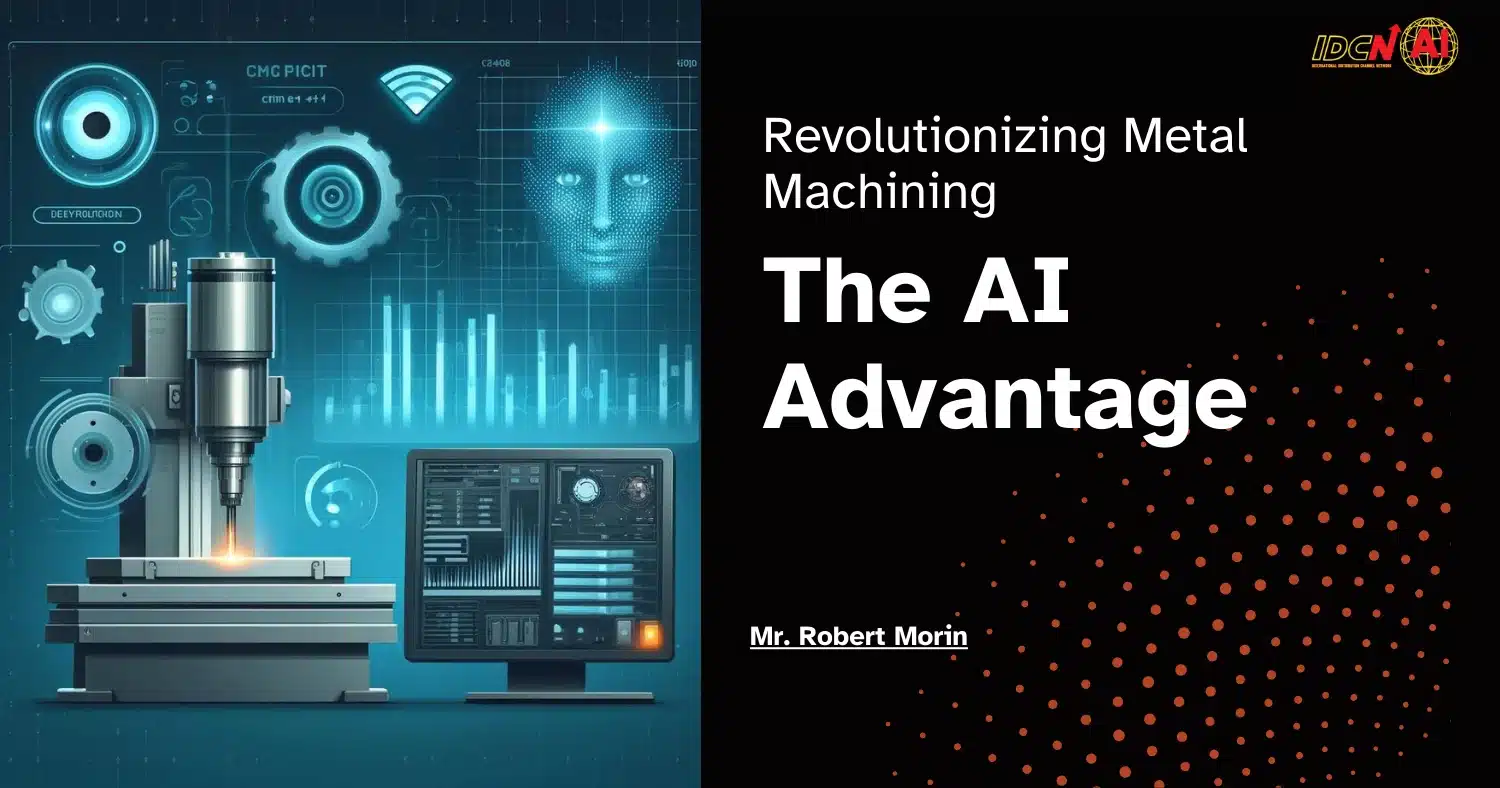
The manufacturing industry is on the brink of a technological revolution, with Artificial Intelligence (AI) leading the charge toward more intelligent, optimized, efficient, and error-free production processes. This revolution is particularly evident in machining metal parts, an area that has historically relied heavily on human expertise and manual adjustments. The integration of AI into this field promises to transform it by providing real-time CpK analysis, enabling continuous process improvement through predictive analytics, and establishing a closed-loop feedback system between Coordinate Measuring Machine (CMM) and Computer Numerical Control (CNC).
—
Real-time CpK Analysis: Ensuring Quality and Precision
At the heart of manufacturing quality control is the process capability index or CpK, a statistical measure of a process’s ability to produce parts within specified limits. Traditionally, analyzing CpK was a post-process activity, with adjustments made after the fact. AI revolutionizes this approach by providing real-time CpK analysis, allowing for immediate adjustments and corrections. By integrating sensors and AI algorithms directly into machining equipment, manufacturers can now monitor the dimensional accuracy and variability of parts as they are being machined, ensuring that every part meets stringent quality standards. This not only reduces waste but also significantly decreases the time required for quality control, thereby increasing overall productivity.
—
Predictive Analysis: Anticipating Issues Before They Arise
AI’s ability to analyze large datasets and identify patterns makes it an invaluable tool for predictive analysis in metal machining. By collecting and analyzing data from every part produced, AI algorithms can identify trends and predict potential issues before they result in defective parts. This predictive capability allows for preemptive adjustments to the machining process, reducing downtime and minimizing waste. For example, if the AI system detects a trend towards increased tool wear, it can predict when a tool will fail and schedule its replacement during regular maintenance rather than after a failure that causes production to stop. This predictive maintenance ensures that machines operate at peak efficiency with minimal interruptions.
—
Closed-loop Feedback: Bridging CMM and CNC Control
One of the most significant advantages of AI in metal machining is its ability to create a closed-loop feedback system between Coordinate Measuring Machine (CMM) and Computer Numerical Control (CNC). In traditional setups, the flow of information between CMM systems, which plan and monitor the manufacturing process, and CNC machines, which physically create the parts, is unidirectional. AI transforms this by enabling two-way communication where data from CNC machines can be used to inform and optimize CMM processes.
This closed-loop system allows for continuous process improvement. For example, AI can analyze data from CNC machines to identify inefficiencies or bottlenecks in the manufacturing process. These insights can then optimize production schedules, tool paths, and machine parameters in the CMM system, resulting in a more efficient and responsive manufacturing process. Moreover, this feedback loop can adapt to changes in production demands or material properties, ensuring that the machining process remains optimal under varying conditions.
—
The Future of Machining: Challenges and Opportunities
Integrating AI into metal machining presents numerous opportunities for the manufacturing industry, including increased efficiency, reduced waste, and enhanced product quality. However, this integration also poses challenges, such as the need for significant investment in technology and training for workers to adapt to these new systems.
Despite these challenges, the potential benefits of AI in metal machining are too significant to ignore. As AI technology continues to evolve and become more accessible, its adoption in the manufacturing sector is expected to accelerate, transforming the industry in ways we can only imagine.
—
Conclusion: Embracing the AI-Driven Future
The use of AI in machining metal parts represents a significant step forward for the manufacturing industry. By providing real-time CpK analysis, enabling predictive analysis of machining trends, and establishing a closed-loop feedback system between CMM and CNC control, AI not only enhances the efficiency and quality of the manufacturing process but also paves the way for a future where machines and algorithms work hand in hand to produce parts that meet the highest standards of precision and quality. As we stand on the cusp of this technological revolution, it is clear that the future of machining—and manufacturing at large—is bright and undoubtedly digital.
Author: Mr. Robert Morin
Location: USA Current
Position: Global Head of Sales and Marketing Experience: 20+ yrs of Sales, Marketing and Manufacturing, to a worldwide audience Career
Summary: Dynamic Executive in Sales, Marketing and Operations | Medical Devices & Engineering | Entrepreneurial Focus | Strategy and Innovation | Complex Global Markets